 corrigan38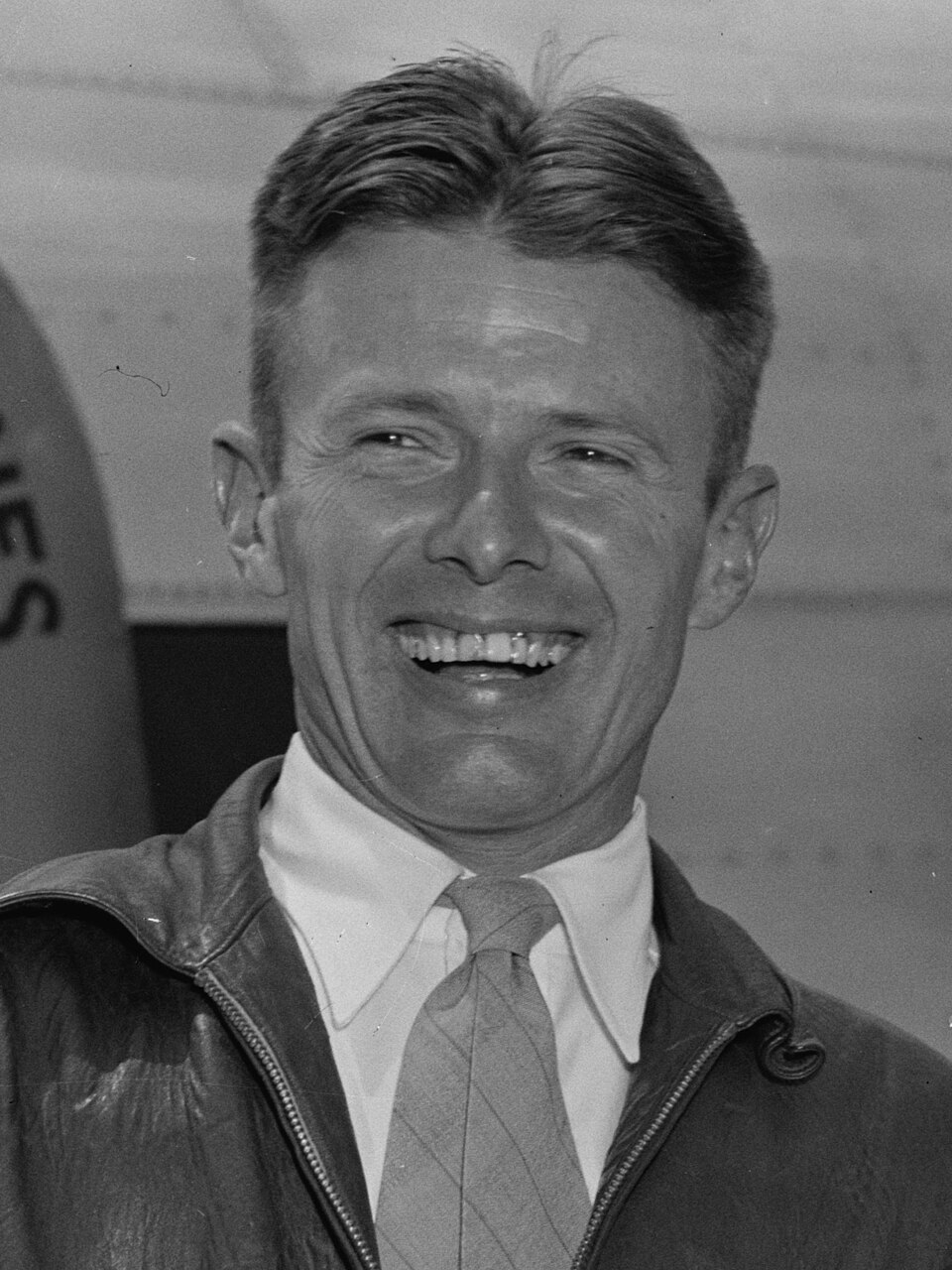
Why the name
Douglas “Wrong Way” Corrigan
An aviation legend who flew the wrong way across the Atlantic, blamed his compass, and never once changed his story.
Photo: Harris & Ewing, 1938, Library of Congress (public domain), via Wikimedia Commons.

17 July 1938
Takes off from Brooklyn, New York
~28 hours
Alone, in a patched-up 1929 Curtiss Robin
Dublin
Flight plan said Long Beach, California
The story
- A real aviatorCorrigan was a genuine, skilled pilot and mechanic. In San Diego in 1927 he worked at Ryan Airlines, on the team that built Lindbergh's Spirit of St. Louis. Crossing the Atlantic was the dream he never let go of.
- He said out loud that he wanted to cross itThrough the 1930s he talked about flying the Atlantic and applied for permission to attempt it. The authorities refused: his old, heavily modified plane was judged unfit for an ocean crossing.
- Then, “by accident”In July 1938 he got permission for a transcontinental flight from New York to California instead. He took off from Floyd Bennett Field, and after nearly 28 hours landed in Baldonnel, Ireland. He claimed cloud and a faulty compass had sent him the wrong way, and that he had thought he was over America until he noticed the ocean.
- He stuck to it, for 57 yearsOfficials were sceptical (his licence was briefly suspended), but he never admitted to a plan. New York gave him a hero's parade, he starred as himself in a film, and “Wrong Way Corrigan” became a household name. He kept the straight face until he died in 1995. Most people assume he knew exactly where he was going.
So why name a tiny model after him?
Everyone in AI is flying the same direction: bigger models, more parameters, more data centres. corrigan38 goes the other way, on purpose. It is smaller and dumber: a few megabytes of 1.58-bit numbers, small enough to sit in a processor's L3 cache, writing a short email in a few dozen milliseconds in your browser tab. Is that the wrong way? Arguably. That is the point.
The 38 is for 1938. And like his compass, it is a little off, so expect mistakes.
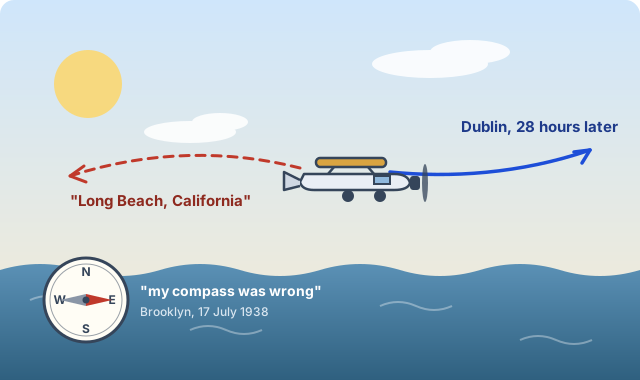
The intended route, the actual one, and the compass. Try the model or read the dev blog.